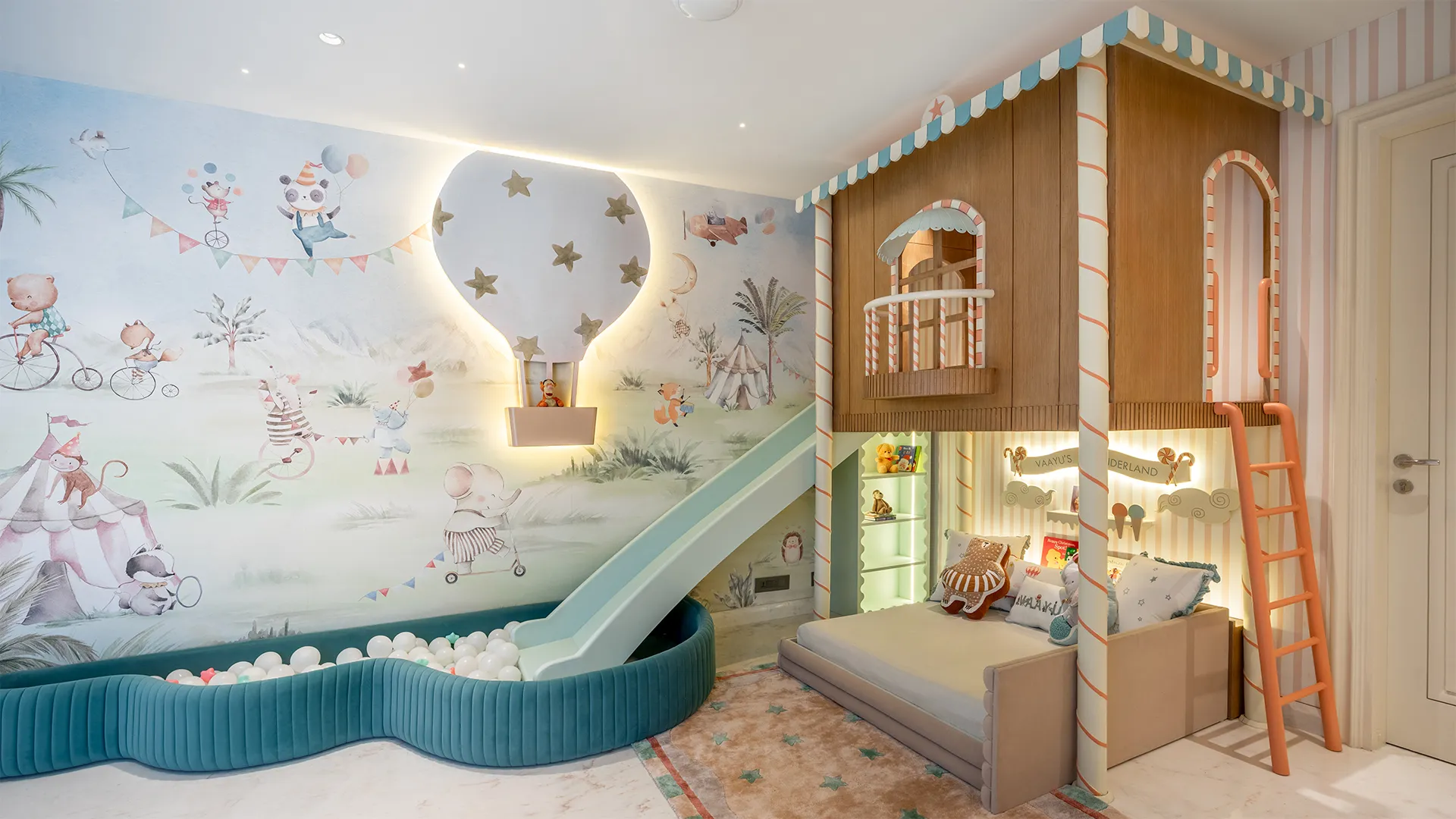
The best “Child Bedroom Designs“ solve two problems at once: they provide a space children love now and stay flexible enough to grow with them. Chasing trendy themes every few years is expensive. Instead, invest in neutral, durable furniture and inject personality through easily swappable items like wall decals, rugs, and bedding. This “base and layer” approach ensures the room transitions seamlessly from toddler to teen.
Here’s how to design by age group, with practical furniture picks and safety considerations built in.
Design by Age Group
| Age Group | Key Needs | Recommended Themes/Styles | Key Furniture |
| Toddler (1–3 yrs) | Safety, soft surfaces, easy supervision | Soft colours, animals, nature | Low toddler bed, padded rug, rounded-edge furniture |
| Early Childhood (4–7 yrs) | Play space, creativity, storage for toys | Adventure, jungle, space, princess | Single bed with storage, study table, toy bins |
| School Age (8–12 yrs) | Study zone, personal expression, growing storage | Sports, art, minimal, interest-based | Desk with shelves, bookcase, wardrobe |
| Pre-teen (12–15 yrs) | Privacy, workspace, social identity | Minimal, mood-lighting, personality-driven | Loft bed with study below, full wardrobe |
Safety First: Non-Negotiables in a Child’s Room
- Anchor all tall furniture (wardrobes, bookshelves) to the wall — tipping is a real danger
- Cover electrical sockets with safety plugs until children are old enough
- Choose rugs with non-slip backing or use a rug pad
- Avoid glass or heavy decorative objects at reachable height
- Ensure bunk beds have full guardrails on all sides if used under age 6
Storage Solutions That Work for Kids
Children accumulate things fast — toys, books, craft supplies, sports gear. The storage system needs to keep pace.
- Open, low-level bins: Easy for kids to put things away independently
- Labelled cubbies or drawers: Works especially well for school-age children
- Under-bed storage: Hydraulic bed base or pull-out drawers for seasonal items
- Wall-mounted bookshelves at child’s eye level: Encourages reading access
- Pegboard on one wall: Flexible, visual, and great for craft or hobby items
Color and Theme Guide
| Color Approach | Works For | How to Use It |
| Neutral base (white, light grey, soft beige) | All ages | Walls and furniture — swap accents as they grow |
| One bold accent wall | 4 years and older | Behind the bed — repaint when they outgrow the theme |
| Pattern through bedding | Any age | Cheapest to update; change seasonally or annually |
| Murals or wallpaper panels | Toddler to 8 yrs | Feature wall only — peel-and-stick for easy removal |
Involving Your Child in the Design
Children who have a say in their room design tend to take better care of it. This doesn’t mean giving them full control — it means offering meaningful choices.
- Let them pick between 2–3 color options you’ve pre-approved
- Ask what activities they want to do in the room — this shapes layout decisions
- Give them one wall or corner that’s entirely their creative zone
A well-designed child’s bedroom is more than a nice space — it supports play, learning, rest, and a growing sense of identity. Invest in the basics, stay flexible, and let your child’s personality fill in the rest.
Leave a Reply