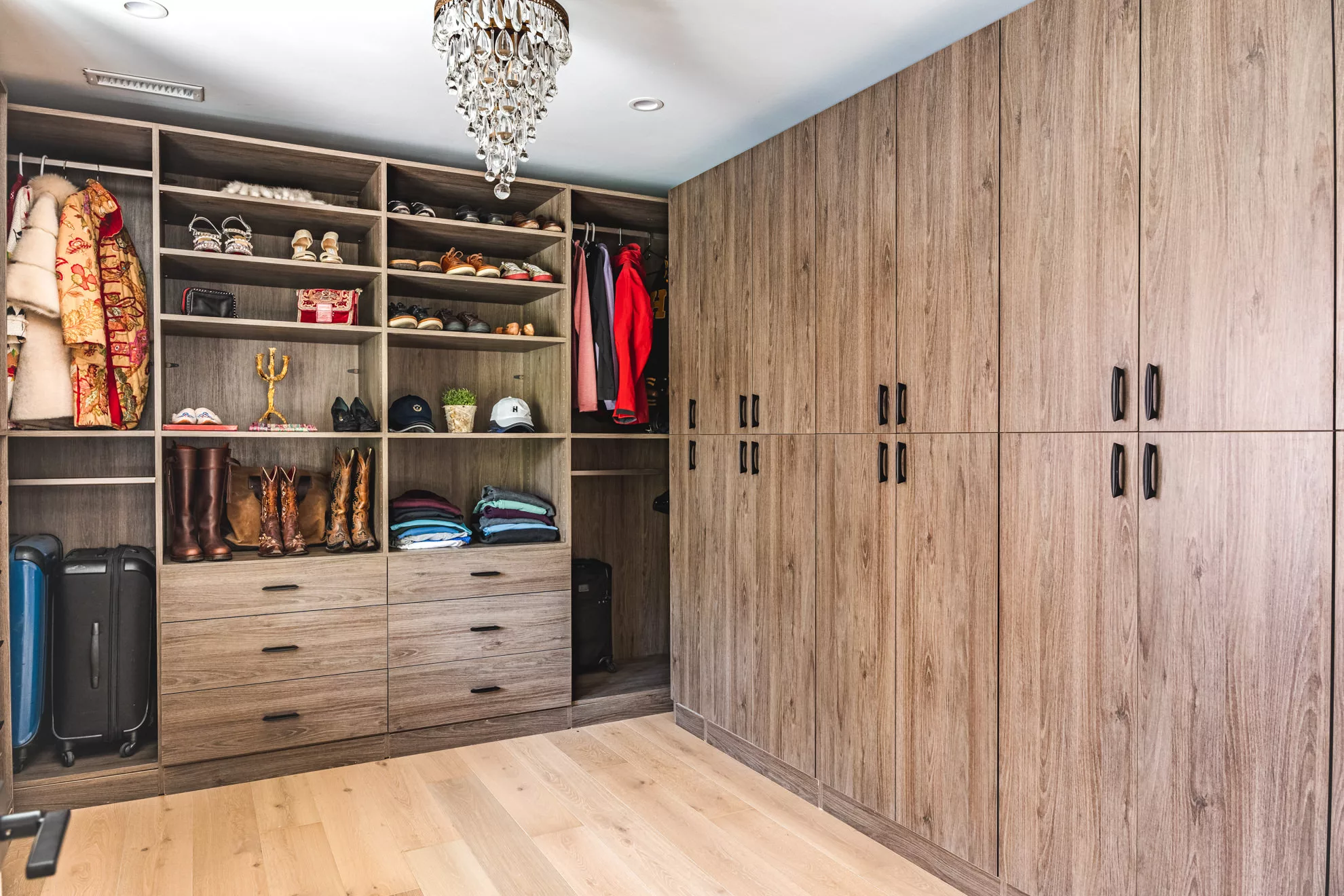
A disorganized closet affects your entire morning. If you’re struggling with clutter, a custom “bedroom closet design“ can change your daily routine. The most effective designs incorporate a mix of hanging rods, adjustable shelving, and pull-out drawers. In 2026, many homeowners are opting for “reach-in” closets with transparent glass doors or open-concept “wardrobe walls” to make the room feel larger and more organized.
Whether you’re building from scratch, renovating an existing wardrobe, or just reorganizing what you have, this guide covers the decisions that matter most.
Types of Bedroom Closets: Which One Fits Your Space?
| Closet Type | Best For | Space Needed | Approx. Cost |
| Reach-in (2–3 door) | Most Indian bedrooms | 3–6 ft wide | ₹10,000 – ₹40,000 |
| Walk-in | Large master bedrooms | Minimum 5×5 ft | ₹40,000 – ₹1,50,000+ |
| Open shelving / wardrobe system | Small rooms, rented spaces | Flexible | ₹5,000 – ₹25,000 |
| Built-in floor-to-ceiling | Maximum storage efficiency | One full wall | ₹30,000 – ₹1,00,000 |
| Corner wardrobe | Utilizing dead corner space | Corner area | ₹15,000 – ₹50,000 |
Designing the Interior: What Goes Where
The interior of your closet matters as much as the type. A well-designed interior makes every item visible and accessible.
- Hanging section: Double-hang for shirts and folded trousers; single-hang for sarees, suits, dresses
- Shelves: Folded clothes, bags, stacked boxes — use adjustable shelves where possible
- Drawers: Innerwear, socks, accessories, documents — things that get rummaged through daily
- Shoe section: Bottom of closet or separate shoe rack; allow 5–6 inches per pair
- Top shelf: Seasonal items, extra bedding, rarely used items
Organization Systems That Actually Hold Up
A freshly organized closet usually reverts to chaos within a few months if the system isn’t practical. The best systems work with your actual behaviour, not against it.
- Group by category first (all tops together, all bottoms together), then by colour
- Use matching hangers — this alone makes a closet look twice as organized
- Drawer dividers for small items — no more tangled accessories
- Transparent bins or labelled boxes for items on high shelves
- A small hooks rail inside the door for bags, belts, or tomorrow’s outfit
Small Bedroom Closet Hacks
Limited space doesn’t mean limited storage — it means smarter storage.
| Problem | Solution |
| Not enough hanging space | Double-hang rod (two levels) for shirts, folded bottoms |
| Too many shoes | Over-door shoe organizer or stacking shoe boxes |
| Cluttered shelves | Shelf dividers to keep stacks from toppling |
| Wasted vertical space | Add a third shelf near the top for seasonal items |
| Door swings into the room | Sliding or bi-fold doors save walking space |
DIY vs. Hiring a Professional
This decision depends on two things: your budget and the complexity of the installation.
- DIY: Modular wardrobe systems (IKEA-style), open shelving, reorganization with inserts — all manageable without a carpenter
- Hire a professional: Custom built-ins, floor-to-ceiling units, walk-in closets, or anything involving civil work like removing a wall
- Middle path: Buy a modular system and pay a handyman for assembly (cheaper than full carpentry)
The Closet Audit: Before You Buy Anything
Before designing or reorganizing, spend 30 minutes auditing what you actually have. Pull everything out. Donate what you haven’t worn in a year. Repair what’s damaged. You’ll almost always find you need less storage than you thought — and that the design problem was access and visibility, not quantity.
A good bedroom closet design isn’t about having the most space — it’s about knowing exactly where everything is. That’s the difference between a closet that works and one that overwhelms you every morning.