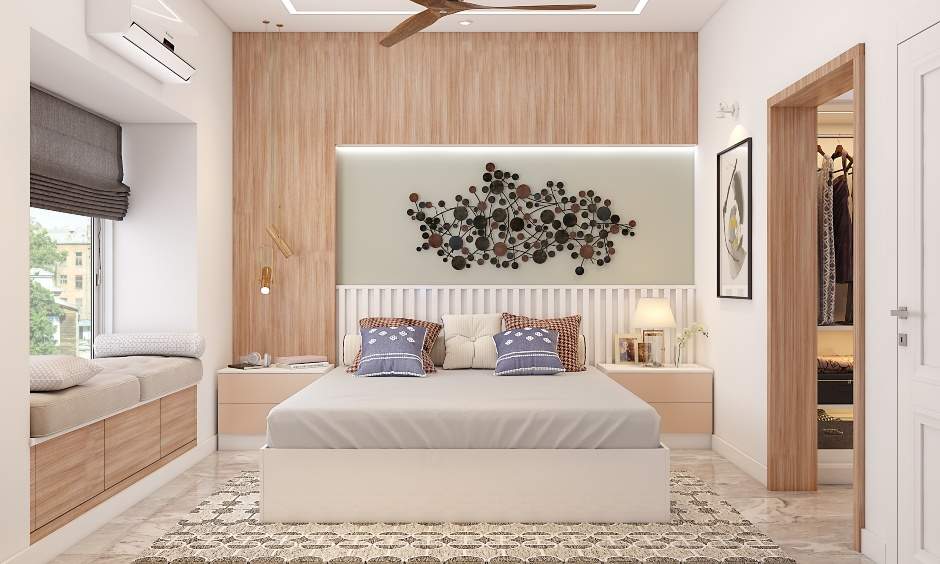
Your bedroom is the one space in your home that’s entirely yours, making “bedroom home interior design“ vital for your well-being. It’s where the day begins and ends, yet it’s often overlooked. A professional-looking result doesn’t require a huge budget; it requires mastering a few core principles: layered lighting, a functional layout that allows for easy movement, and a cohesive color palette that promotes relaxation.
The quickest way to transform a bedroom? Start with your walls and your bed. A fresh coat of paint in a warm neutral or a deep accent color paired with good-quality bedding can change the entire mood of the room — sometimes in a single weekend.
The Foundation: Getting Layout Right
Before picking colors or buying furniture, think about flow. Can you walk around the bed easily? Is there enough natural light? These basics shape everything else.
The bed should be the focal point — ideally against the largest wall, centered. Keep nightstands balanced on both sides. Avoid pushing furniture against every wall; leaving breathing room actually makes a small room feel bigger.
Color: The Easiest Upgrade You Can Make
Color sets the emotional tone of a room. Lighter shades open up a space visually, while deeper tones create intimacy and coziness. The table below breaks it down by room size.
| Room Size | Recommended Palette | Effect |
| Small (under 120 sq ft) | Soft whites, light grey, blush | Makes room feel airy and open |
| Medium (120–180 sq ft) | Warm beige, sage green, dusty blue | Balanced and calming |
| Large (180+ sq ft) | Navy, forest green, charcoal, terracotta | Adds depth and drama |
Lighting: The Most Underrated Design Tool
Most bedrooms rely on a single overhead light — and that’s a mistake. Layered lighting is what separates a well-designed bedroom from a basic one.
- Overhead light: For general visibility (use a dimmer if possible)
- Bedside lamps: Warm-toned for reading and winding down
- Accent lighting: LED strips behind headboard or under bed for ambience
Furniture Selection: Less Is More
A cluttered bedroom rarely feels restful. Choose pieces with purpose. A bed with built-in storage solves two problems at once. A slim wardrobe with mirrored doors can make a narrow room feel twice as wide.
If your room is small, prioritize: bed frame with storage, one or two nightstands, and a compact wardrobe. Everything else is optional.
Textures and Soft Furnishings
This is where personality enters the room. Mix textures to create warmth — a linen duvet, a chunky knit throw, a jute rug, velvet cushions. You don’t need to spend a lot. Even a few well-chosen pillows and a layered rug can transform a basic white bedroom into something that feels curated.
Common Mistakes to Avoid
- Hanging artwork too high (eye level is the rule)
- Using a rug that’s too small for the bed
- Ignoring storage until it becomes a clutter problem
- Choosing style over comfort in bedding
- Over-decorating a small room
Quick Wins — No Renovation Required
You don’t always need a full redesign. Sometimes a few targeted changes make all the difference.
| Change | Estimated Cost | Impact |
| New bedding set | ₹1,500 – ₹5,000 | Instant visual refresh |
| Curtains with blackout lining | ₹800 – ₹3,000 | Better sleep + polished look |
| Bedside lamp upgrade | ₹500 – ₹2,000 | Warmer, layered lighting |
| Wall paint | ₹1,500 – ₹4,000 | Complete mood change |
| Mirror (large, leaning) | ₹1,000 – ₹4,000 | Makes room feel bigger |
Good bedroom interior design isn’t about following trends — it’s about creating a space that feels genuinely yours. Start with one change, see how it feels, and build from there.