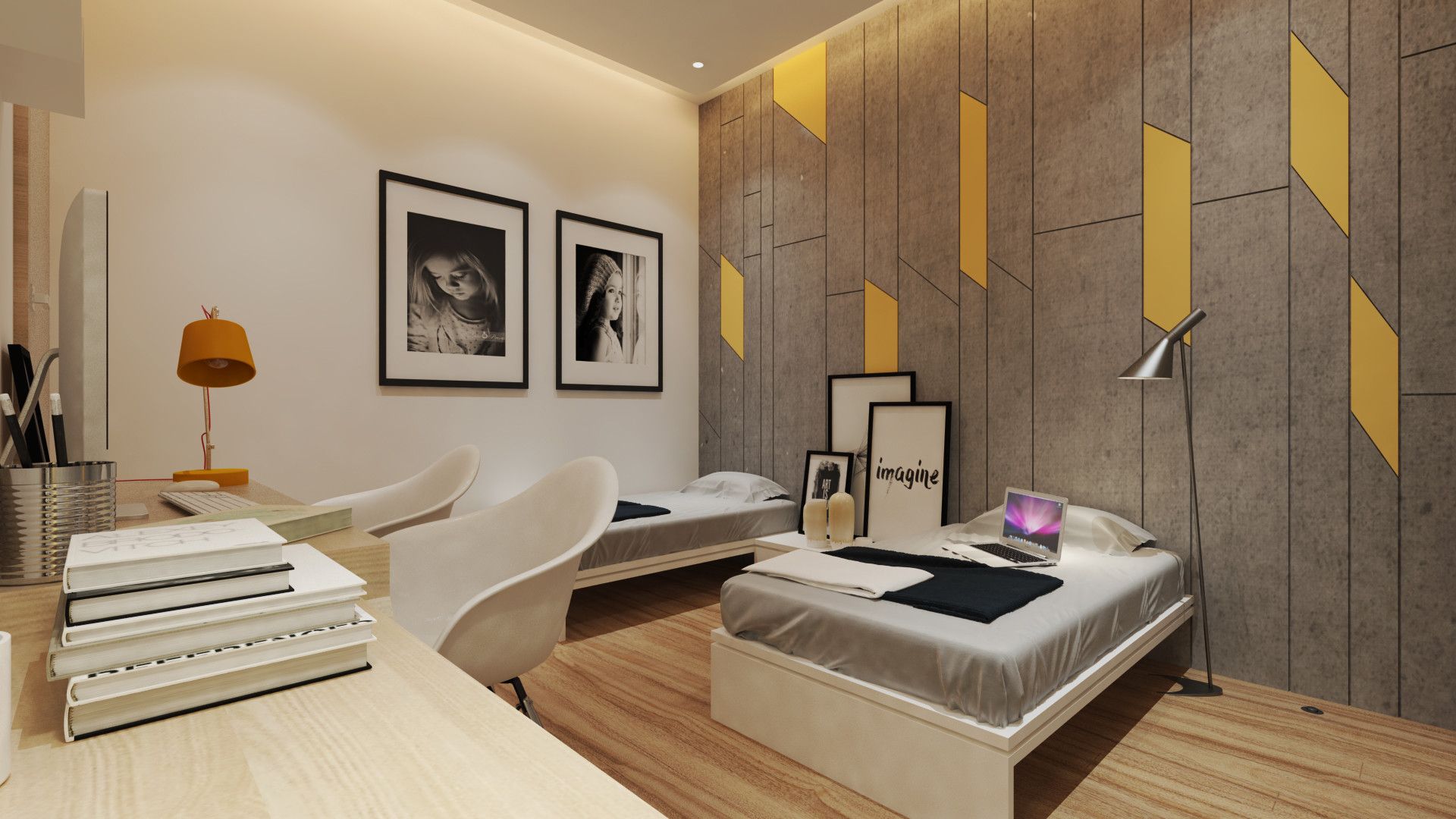
A well-executed “Kids Room Interior Design“ does three things: it sparks imagination, supports daily routines, and stays easy to tidy. The key for 2026 is balancing aesthetics with durability—think washable wall paints, robust furniture with rounded edges, and “hidden” storage solutions like under-bed drawers or upholstered toy chests. A design that evolves with the child’s hobbies will always be the most successful.
Whether you’re designing from scratch or refreshing an existing room, here’s a theme-based approach that covers everything from color schemes to flooring choices.
Popular Themes and How to Execute Them Well
| Theme | Color Scheme | Key Furniture/Accessories | Keep It Flexible By… |
| Outer Space | Deep navy, black, silver, yellow accents | Star-print bedding, glow stars on ceiling, rocket wall art | Keeping walls dark navy (not murals) |
| Jungle / Nature | Greens, earthy browns, warm beige | Leaf-print cushions, wooden cot, hanging woven lamp | Using removable botanical wallpaper |
| Princess / Fantasy | Blush, lavender, gold accents | Canopy over bed, fairy lights, soft rugs | Keeping actual furniture neutral white |
| Minimal / Scandi | White, light wood, soft pastels | Clean-lined furniture, simple bedding, organized shelves | Easy — minimalism is inherently adaptable |
| Sports / Active | Bright primary colours, team colors | Printed rugs, wall-mounted scoreboard or chalkboard | Swapping prints and accessories seasonally |
Multifunctional Furniture: The Smartest Investment
Kids’ rooms are small, and children’s needs change fast. Multifunctional furniture stretches both space and budget.
- Loft bed with study area below: Frees up floor space completely
- Ottoman with storage: Seating + toy storage in one piece
- Fold-out wall desk: Study space that disappears when not in use
- Modular shelving: Reconfigure as needs change
- Trundle bed: Sleepover-ready without a permanent second bed
Flooring and Lighting: Safety Meets Style
Flooring in a kids’ room needs to handle everything: dropped toys, spills, and constant foot traffic.
- Vinyl plank or laminate: Durable, easy to clean, warmer underfoot than tile
- Area rug over hard floor: Softens the play area, defines zones, easily replaceable
- Avoid dark-colored carpets: Stains are impossible to hide
For lighting, kids’ rooms need both functional light (for studying and tasks) and gentle ambient light for bedtime routines.
- Overhead light with dimmer: For full-room visibility that can soften at night
- Desk lamp with warm light: Protects eyes during homework
- Nightlight or low plug-in lamp: Reassuring for young children
Common Mistakes Parents Make in Kids’ Room Design
| Mistake | Better Approach |
| Going all-in on a theme with permanent fixtures | Use theme in bedding and accessories only |
| Storage that’s too high for the child to reach | Keep daily-use storage at child height |
| Choosing white or light carpets | Go for mid-tone rugs with a pattern to hide wear |
| Ignoring acoustics (echo in bare rooms) | Rugs, curtains, and soft furnishings absorb sound |
| Designing for photos, not for play | Prioritize floor space and accessible storage first |
Creating Zones in a Single Room
Even a small kids’ room benefits from defined zones — a sleeping area, a play area, and a study area. You don’t need walls to create zones: rugs, lighting, and furniture placement do the job.
- Sleeping zone: Bed against the wall, calm colors, soft lighting
- Play zone: Open floor space, accessible toy storage, a playmat or rug
- Study zone: Desk near natural light, organized stationery, a good lamp
The best kids’ room designs aren’t the ones that look the most impressive — they’re the ones the child actually lives and plays in happily. Design with them in mind, not just for the photos.